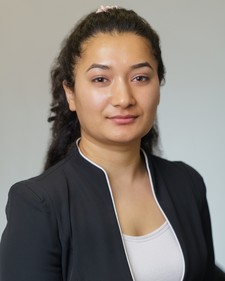
Amjila Bam I am a fourth-year PhD student in Biostatistics and Data Science, with an MS in Applied
Statistics from the University of Northern Colorado and a BBA from Tribhuvan University
in Nepal. My research focuses on cancer genomics, health disparities, and the development
and application of statistical and machine learning methods for high-dimensional biomedical
data. As a research assistant at LSUHSC and the LSU-LCMC Health Cancer Center, I contribute
to federally funded research involving triple-negative breast cancer and breast and
lung cancer, integrating genomic, environmental, metabolic, and sociodemographic data.
My methodological experience includes Bayesian mediation and moderated mediation analysis,
multi-omics integration, survival analysis, generalized linear mixed models, and high-performance
computing. In addition to research, I have several years of teaching, mentoring, and
statistical consulting experience. My long-term interests are in biostatistics, machine
learning, cancer genomics, precision medicine, and developing rigorous data-driven
approaches to better understand and reduce cancer health disparities.
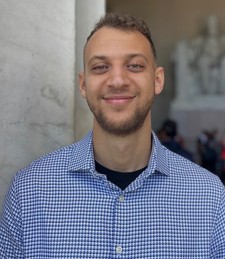
Achraf Cherkaoui I am a Ph.D. researcher and Graduate Assistant in the Department of Biostatistics
and Data Science at Louisiana State University Health Sciences Center (LSUHSC). My
academic and professional work bridges classical biostatistical methodology with modern
machine learning, focusing on the development of resilient, theoretically grounded
algorithms for complex data environments. Outside of research and computing, I stay
active through sports, regularly playing pickleball and soccer.
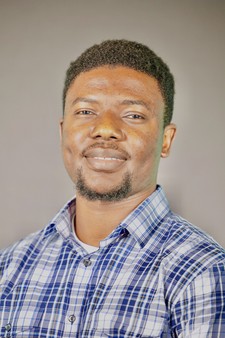
Oluwafunmibi Fasanya Oluwafunmibi Omotayo Fasanya is a PhD student and Research Assistant in the Department
of Biostatistics and Data Science at Louisiana State University Health Sciences Center
(LSUHSC) New Orleans. He is originally from Nigeria and holds a Master of Science
in Statistics from the University of Nebraska–Lincoln. His research focuses on developing
and applying statistical and machine learning methods for analyzing genomic, multi-omics,
longitudinal, and other high-dimensional biomedical data. He is also interested in
developing and evaluating methods for analyzing longitudinal and correlated data to
better understand disease progression. Through this work, he aims to develop data-driven
approaches that advance biomedical research and contribute to more effective, personalized
approaches to healthcare.
Zhuohuan Li
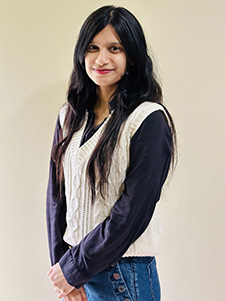
Masuma Mannan My name is Masuma Mannan. I completed both my Bachelor’s and Master’s degrees in
Statistics from Jahangirnagar University in Dhaka, Bangladesh. I am currently pursuing
a PhD in Biostatistics at LSU Health Sciences Center New Orleans. My research interests
include genetic epidemiology, gene–environment interactions, statistical genetics,
genomic data analysis, statistical modeling, and machine learning, with a particular
interest in understanding how genetic and environmental factors contribute to cancer
risk and other health outcomes. Outside of academics, I enjoy traveling and exploring
new places, meeting new people, and trying different foods. I also love good music,
reading books, and spending time with friends and family.
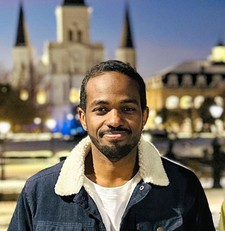
Mohamed S. Mohamed Motivated by my medical background and international public health experience, I
was thrilled to join a program that strikes the perfect balance between theory and
application. 10 years ago, I worked with my students to explain how malaria odds increase
significantly with rain, and why public health programs that recommend antimalarial
for febrile children showed significant reduction in mortality in rural settings where
labs are not available. My current research interests center on robust spatio-temporal
modeling and surveillance analytics, and I am grateful for the opportunity to master
these methodologies while leveraging cutting-edge machine learning and artificial
intelligence.
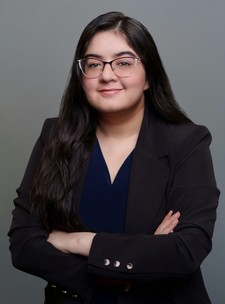
Mansi Thakrar Mansi Thakrar - PhD BSDS (2024–2029). Mansi holds an MPH in Biostatistics and Epidemiology
from Boston University (2022). Her research applies ipsative machine learning models
(approaches that learn subject-specific baselines rather than population-level norms)
to longitudinal data, including wearable physiological measurements to build personalized
predictive models. Prior to LSU, Mansi worked as a Statistical Programmer at Massachusetts
General Hospital in affiliation with Harvard Medical School on the NIH RECOVER Long
COVID Initiative. Additionally, she has worked as a Statistical Programming & Analysis
Intern at Pfizer, a Data Analyst & Study Coordinator at Boston Medical Center, and
an Advanced Data Science Associate Consultant Intern at ZS Associates.
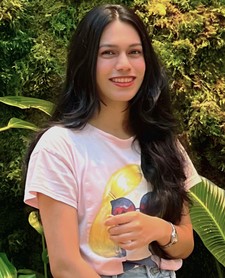
Nubaira Rizvi I'm a Ph.D. candidate in Biostatistics at LSU-Health New Orleans. My research develops
causal inference methods for studying environmental and socioeconomic drivers of cancer
disparities.
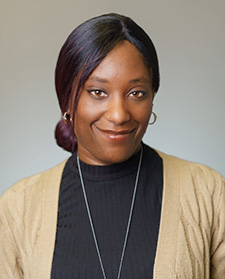
Mykia N. Wiggins Mykia Wiggins is a graduate student in the Master of Science in Biostatistics program
at LSU Health Sciences Center New Orleans. She holds a bachelor’s degree in Psychology
with a minor in Biology and has developed research interests at the intersection of
biostatistics, neuroscience, and public health. Her current thesis research applies
continuous-time Markov chain models to longitudinal data from the Bogalusa Heart Study
to examine changes in blood pressure states over time. She is particularly interested
in using quantitative methods to better understand health and disease progression
and hopes to continue pursuing research in neuroscience and addiction.
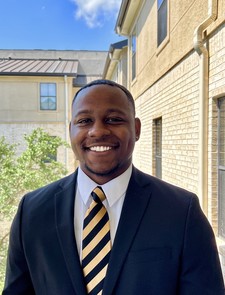
Devante Williams Hello, I am pursuing an MPH in Biostatistics and Data Science (BSDS) at LSU Health
Sciences Center (LSUHSC). My path to BSDS has run through both psychology and applied
research. I am a healthcare data professional and researcher with expertise spanning
health data architecture/modeling, statistical computing, business intelligence, and
health equity analytics. I earned my Bachelor of Science in Rehabilitation Services
(with minors in Psychology and Aerospace Studies) from Alabama State University. I
also received post-baccalaureate research exposure at the University of Houston. Since
March 2025, I have worked as a Data Manager at LSUHSC School of Medicine within the
Department of Pediatrics. In my role, I manage big data for department leadership,
architect enterprise data pipelines (Epic EHR to LSU REDCap and/or R), extract and
analyze clinical datasets exceeding 100,000 rows, and build interactive dashboards
in Epic, Tableau, or Power BI to drive quality improvement across LCMC Health's pediatric
specialty teams. I have also designed REDCap data collection forms to standardize
research data capture and co-presented poster presentations at LSUHSC Pediatric Research
Day 2026 and the 2026 Louisiana AAP Chapter Conference. A broad research interest
of mine is applying rigorous biostatistical methods to understand and address health
disparities. More specifically, I intend to leverage causal inference, spatial statistics,
and enterprise healthcare data in assessing social drivers of health, optimizing clinical
care delivery, and reducing regional health inequities across the Greater New Orleans
area.
Biostatistics and Data Science Alumni Profile
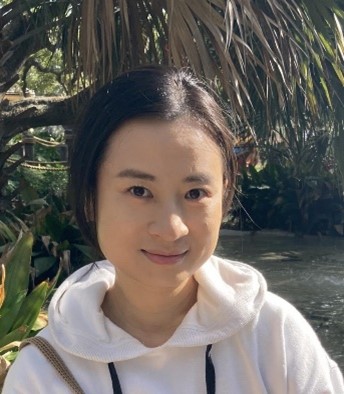 Chaoyi Zeng
MS in Biostatistics, 2021
- Where do you currently work and what are your job responsibilities?
I’m currently a data analyst working for the United Network for Organ Sharing (UNOS).
My main responsibility is dealing with various data requests from the transplant community.
- Why did you choose to study biostatistics and what led you to LSUHSC Biostatistics
Program?
After a year of study in Epidemiology, I became highly interested in statistical methods,
so I switched to the Biostatistics Program. I’m glad that I made this decision because,
on the one hand, I learned systematic knowledge of statistical theories and methods.
On the other hand, I received intensive training in using coding and analysis tools.
The reason I chose LSUHSC is that the curriculum is well designed, which I believe
would satisfy my learning needs while preparing me well for the job market. Plus,
the tuition is affordable.
- What was the most rewarding part of your MS degree?
The most rewarding part is that my MS degree has led me to my current career: a professional
data analyst who makes contributions to the organ transplant community/healthcare
industry every day. I feel fulfilled and proud each time I look at my signature, which
prints the slogan of our organization, ‘Saving Lives Together.’ It’s a long way for
someone starting from scratch (since my undergraduate major is English instead of
any major related to Statistics or Computer Science), but in the LSUHSC Biostatistics
Program, my advisor, Professor Hui-Yi Lin, and I made it happen.
 Raven P. Moret
MS in Biostatistics, 2021
- Where do you currently work and what are your job responsibilities?
I am currently entering into my second year at the Center for Disease Control based
in Atlanta, GA. I am serving as a biostatistician and assist on studies to be published
in peer-reviewed journals examining provider practice with respect to various diseases.
Additionally I am developing protocols for power analysis and sample size within my
division as well as course modules for incoming fellows.
- Why did you choose to study biostatistics and what led you to LSUHSC Biostatistics
Program?
After seven years of research I came to enjoy the analytical process of the studies
I was conducting. I felt that being able to put my findings into descriptive form
to show and explain was very fulfilling after all of my hard work. As a New Orleans
native I wanted to stay close to home and was aware of the strong work done at LSUHSC
from many of the presentations at the Louisiana Cancer Center Scientific Retreats.
I knew I’d be in good hands.
- What was the most rewarding part of your MS degree?
The most rewarding part of this degree was being able to expand my knowledge from
an analytical perspective. The instructors were amazing at providing so many ways
to approach and view problems. Also, the technical skillsets I learned through the
program, the different software and applications, opened up countless opportunities
for me both career and growth wise. Returning to school after so many years was a
very intimidating choice but I couldn’t be happier with my decision.
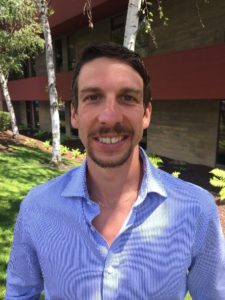 Ondrej Blaha
PhD in Biostatistics, 2019
- Where do you currently work and what are your job responsibilities?
Currently, I work as a Senior Biostatistician at Stanford University, School of Medicine.
I am responsible for running clinical studies under an umbrella of projects that span
University’s Pediatric Heart Center, Hospital Medicine, Behavioral and Developmental
Studies, and a triplet of concussion studies. A joint effort of University’s departments
of neurology, neurosurgery, engineering, center for clinical research, NIH, and PAC-12
are looking into the long-term effects of concussive and sub-concussive impacts on
athletes’ brain structure using an in-house developed, censors embedded mouth-guard
and in-house developed AI software for evaluating individual events. Currently, my
work is mostly in clinical trials and bio-medical sciences in general. I work on everything
that is a part of being a senior biostatistician: design of experiments, grant writing,
programming, statistical analysis, manuscript writing and editing, etc. That is the
fun stuff. I work on developing statistical methodologies as well. I am also responsible
for leading and training junior statisticians and preparing training sessions for
statistical beginners.
- Why did you choose to study biostatistics and what led you to LSUHSC Biostatistics
Program?
Biostatistics is a marriage between my two most favorite disciplines; mathematics
and biology. I could never decide which one I liked better. I loved medicine and biology
but always knew that I can influence more and save much more lives through mathematics.
It is not an accident that mathematics is called the “queen of the sciences”. However,
I missed being in touch with biology throughout my initial years as a mathematician.
When I eventually learned about the existence of biostatistics it was clear what career
I have to pursue. I learned about the LSUHSC Biostatistics program when Dr. Volaufova
was on sabbatical at my Alma Matter in my home country, so you can say it was her
who led me there.
- What was the most rewarding part of your PhD degree?
Of receiving my PhD or working towards it? The best part of receiving the degree was
the first paycheck. And the knowledge that I now have my dream job and things will
only get better from here. About working towards my degree, it was working with my
mentors. Learning about new, unexplored areas of statistics, how to conduct theoretical
research, be independent, and also making my program work. You know, the feeling when
the program finally runs as intendedJ. LSUHSC has that unique one-on-one approach
you can hardly get anywhere else. You can be sure that you will get enough attention
and you can always ask questions outside the scope of the classwork. Faculty members
were extremely helpful and were always there when I needed them the most. LSUHSC also
has unmatched opportunities for collaboration that are readily available. You can
work alongside distinguished researchers on various projects of your interest. There
is a huge demand and not enough hands to do all the work. It is only up to you if
you pick up the call. In the end, these opportunities are what eventually helped me
land the best job in the world.
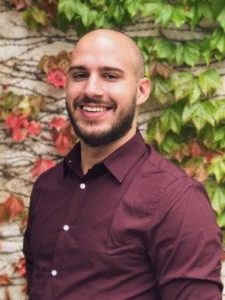 Jacob Maronge
MS in Biostatistics, 2016
- Where do you currently study and what are your goals after graduating?
I am currently a PhD candidate in biostatistics, which is a specialization within
the statistics PhD jointly offered between the departments of statistics and biostatistics
at the University of Wisconsin-Madison. I work with Professor Paul Rathouz on outcome-dependent
sampling (ODS); the core concept of ODS is how to perform correct estimation and inference
when sampling is performed based on observed values of a response, instead of a predictor.
Specifically, we are thinking about how to generalize the notion of case-control,
studies, which are popular in epidemiology, to non-binary outcomes. We refer to these
types of studies as “generalized case-control studies”. My dissertation research revolves
around how to design and analyze these types of studies.
During my time at LSUHSC I worked with Professor Zhide Fang on optimal experimental
design. The work during my MS was a bit different because it was focused on design
using covariates, not outcomes. However, it was particularly useful because I think
it gave me a strong understanding of important design concepts.
After graduating, I would like to join a biostatistics department where I can continue
to work in biomedical research. My goal is to be a clinical biostatistician and continue
to develop methods and useful tools for practitioners.
- Why did you choose to study biostatistics and what led you to LSUHSC Biostatistics
Program?
During my undergraduate degree, I studied both biology and physics. I have always
been interested in biology and medicine, but probably had more natural talent in mathematics.
Biostatistics gives me the opportunity to use mathematics in a way that feels like
it has a more immediate impact. I chose LSUHSC for personal reasons, but it ended
up being the perfect place for me at the time.
- What was the most rewarding part of your MS degree?
My time at LSUHSC was one of the most influential times of my education. The professors
I had during my MS still have a huge impact on how I think about statistics now. It
was great to be in a place where I felt like I was receiving quality, individualized
education. I still keep in touch with many of my instructors from LSUHSC, which is
a testament to the effort they put into their students.
The most rewarding part was when I came to Wisconsin, I immediately felt prepared
for the coursework and other challenges. Had I not attended LSUHSC, I think I would
have struggled much more.
 Angela Stodghill
PhD in Biostatistics, 2015
- Where do you currently work and what are your job responsibilities?
I am a contracted senior statistician for Janssen Pharmaceuticals. My main job duties
are designing and planning clinical trials as well as analyzing clinical trial data.
In addition, I am working on improving statistical methods used in clinical trials.
- Why did you choose to study biostatistics and what led you to LSUHSC Biostatistics
Program?
Growing up, my parents worked in the medical and pharmaceutical fields. I was planning
to be a doctor or a pharmacist. However, I also loved computer programming. More importantly,
numbers and the way data can help people in their lives fascinates me. In college,
one of my math professors, a statistician working in the pharmaceutical industry,
introduced me to the drug development process and the important role a statistician
plays in a clinical trial. Therefore, getting a PhD in biostatistics was a no brainer
for me. I chose LSUHSC because LSU is a great college to be a part of, and it has
spent a huge amount of funding on medical research. In addition, the biostatistics
program provides very attractive stipends for PhD students and a lower cost of tuition
compared to other state funded schools.
- What was the most rewarding part of your PhD degree?
During my dissertation process, I learned how to think, research, and solve problems
independently. In addition, I learned how to write formally and logically to demonstrate
my way of thinking. All these skills help me still in my daily work. Also, the course
material that you learn is what will be used in your future job. During my past 4
years of work, I used a majority of the statistical methods I learned in my courses.
Most importantly, I am using SAS to do my daily job which I learned mostly as a PhD
student.
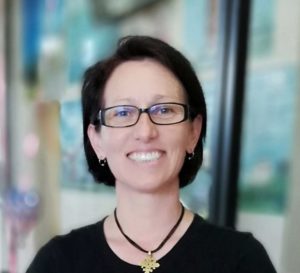 Jennifer Hayden
MS in Biostatistics, 2011
- Where do you currently work and what are your job responsibilities?
I am a senior research scientist with Humana Healthcare Research. My primary responsibility
is to design scientifically valid healthcare studies to answer research questions
around clinical and economic trends. Using large ‘real world’ healthcare data sources
I develop measures, produce statistical output and interpret and report study results
through presentations, abstracts and publications.
- Why did you choose to study biostatistics and what led you to LSUHSC Biostatistics
Program?
By the time I enrolled into the LSUHSC Biostatistics Program I had already enjoyed
a long career in healthcare data management which included database development, data
maintenance and data monitoring but, I did not have training or skills in statistical
data inference. I love working with healthcare data and I knew I wanted to do more
with it and could apply the programming skills I already had to a biostatistics degree.
I was working in a different department at the LSUHSC School of Public Health when
I applied for the program and knew I would get an excellent statistics education from
LSUHSC. I personally knew the faculty as colleagues. They are excellent statisticians,
well published, and dedicated to helping each of their students succeed; even older
and non-traditional students like me.
- What was the most rewarding part of your MS degree?
Designing and programming the research question which became my Master’s thesis was
for me the best future job training I received from the MS program. The faculty challenged
me to not be afraid to think independently and I apply these skills daily to develop
well designed study protocols which I then translate into SAS code. I really love
the work I do and am myself now published in a variety of journals and conferences. The
LSUHSC Biostatistics Program changed my life and opened up so many opportunities I
would not otherwise have had. I work from home, right here in New Orleans, on huge
datasets with hundreds of thousands of observations doing exactly what I envisioned
doing all those years ago.